Skip to content
Introduction
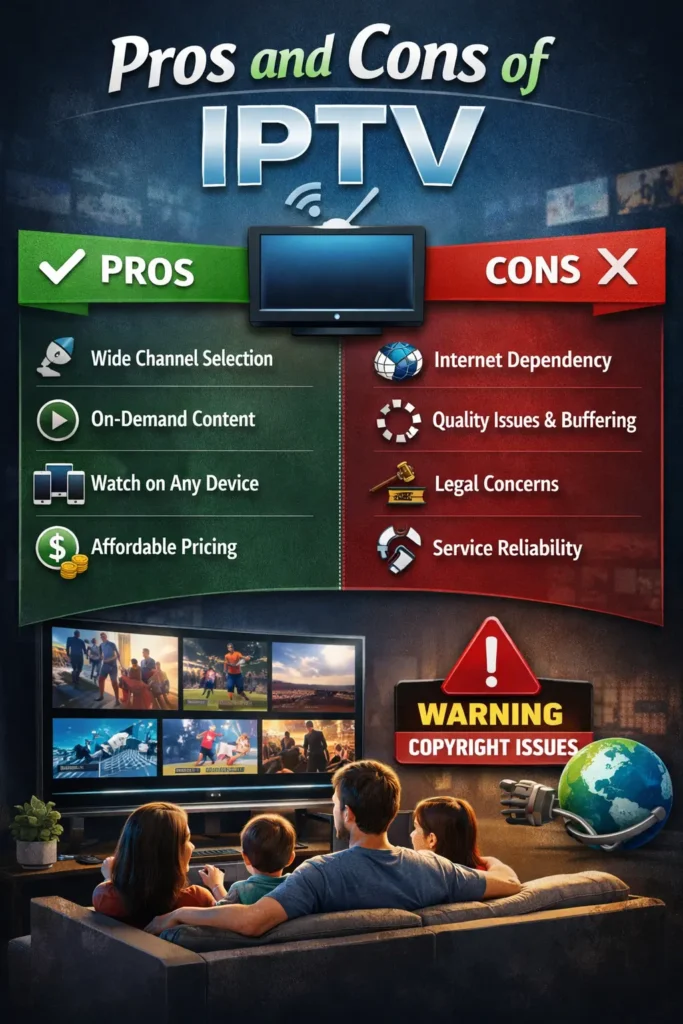
Internet Protocol Television (IPTV) has become one of the most talked-about alternatives to cable and satellite TV in the United States. With flexible pricing, internet-based delivery, and access across multiple devices, it’s no surprise that cord-cutters are increasingly asking the same question:
Is IPTV legal in the US?
The confusion is understandable. Some IPTV services operate fully within U.S. law, while others do not. News about service shutdowns, copyright lawsuits, and streaming crackdowns has only added to the uncertainty. This article breaks down IPTV legality in the USA in simple, non-technical terms—so you can understand what’s legal, what’s not, and how to choose safely.
What Is IPTV?
IPTV stands for Internet Protocol Television. Instead of broadcasting TV signals through satellite or cable infrastructure, IPTV delivers television content through the internet.
In practical terms, IPTV allows users to watch:
- Live TV channels
- On-demand movies and series
- Time-shifted content (catch-up TV)
All streamed over a broadband internet connection using apps or compatible devices like smart TVs, streaming boxes, tablets, or smartphones.
Importantly, IPTV is a delivery technology, not a service category defined by legality. That distinction matters.
Why Is IPTV Legality Confusing in the U.S.?
Many people assume IPTV is illegal because:
- Some services offer thousands of premium channels at unrealistically low prices
- IPTV is often marketed online without clear licensing details
- Media coverage focuses on illegal IPTV shutdowns, not legal ones
This has led to a common misconception: “If it’s IPTV, it must be illegal.”
That’s simply not true.
Is IPTV Legal in the United States?
Short Answer: Yes—IPTV technology is legal in the U.S.
However, not all IPTV services are legal.
The legality depends entirely on whether the IPTV provider has the proper rights and licenses to distribute the content they stream.
IPTV Technology vs. IPTV Services
- Legal: Using IPTV technology to stream licensed content
- Illegal: Streaming copyrighted content without permission
This is the same distinction that applies to music or video platforms. The internet itself is legal—but how it’s used matters.
IPTV Laws in the United States (Explained Simply)
In the U.S., television content is protected by copyright law. Providers must have authorization from content owners (networks, studios, distributors) to legally stream channels or shows.
U.S. copyright enforcement is primarily governed by the Digital Millennium Copyright Act (DMCA), which:
- Protects copyrighted digital content
- Allows authorities to shut down infringing services
- Enables rights holders to take legal action against unauthorized distributors
What this means for users:
Watching content from a properly licensed IPTV service is legal. Using unlicensed services may expose users to risks—even if they’re not hosting or distributing the content themselves.
Legal IPTV vs Illegal IPTV (Key Differences)

Licensing & Content Rights
Legal IPTV services
- Have agreements or distribution rights for the content they stream
- Clearly state what content is licensed
- Operate transparently
Illegal IPTV services
- Stream premium channels without permission
- Avoid explaining how content rights are obtained
- Often disappear suddenly due to enforcement actions
Streaming Quality & Reliability
Legal IPTV
- Stable servers
- Consistent stream quality
- Regular updates and maintenance
Illegal IPTV
- Frequent buffering
- Channels randomly stop working
- Services shut down without notice
Risks for Users
Using legal IPTV services
- Low legal risk
- Secure payment systems
- Legitimate customer support
Using illegal IPTV services
- Possible service loss with no refunds
- Exposure to malware or phishing
- Account data security risks
- In rare cases, legal warnings or ISP notices
This is why many people ask not only “is IPTV legal in the US?” but also “is IPTV safe and legal?”—the two are closely connected.
How to Identify a Legal IPTV Provider
Choosing a legal IPTV service requires some due diligence. Here are the most important signs of legitimacy.
1. Transparency
A legal IPTV provider clearly explains:
- What the service offers
- How it works
- What type of content is included
Vague marketing like “all channels worldwide forever” is a red flag.
2. Licensed or Authorized Content
While providers may not list every licensing agreement publicly, legitimate services:
- Avoid claiming ownership of copyrighted channels
- Do not imply illegal access to premium networks
- Use compliant, professional language
3. Clear Terms of Service & Privacy Policy
Legal IPTV services provide:
- Written terms of service
- Privacy policies
- Refund or cancellation policies
If these pages are missing, proceed with caution.
4. Customer Support & Business Presence
Reliable providers offer:
- Real customer support channels
- Consistent branding and website presence
- Professional communication
5. Secure Payments
Legal IPTV providers use:
- Encrypted checkout
- Trusted payment processors
- Transparent billing
Requests for anonymous payments only can be a warning sign.
Is IPTV Safe to Use in the USA?

IPTV can be safe to use in the USA when you choose a reputable, transparent provider.
Safety concerns typically come from:
- Malware embedded in unofficial apps
- Poorly secured third-party services
- Lack of customer accountability
Reputable IPTV services prioritize:
- Platform security
- App updates
- User data protection
Avoiding unverified apps and suspicious websites is one of the easiest ways to stay safe.
Recommended IPTV Provider (Compliance-Focused Option)
Many users looking for legal IPTV services prefer providers that emphasize reliability, transparency, and user safety rather than exaggerated claims.
One option that users often consider is FlexvesionPro, which is positioned as:
- Offering stable streaming servers
- Providing high-quality viewing experiences
- Maintaining responsive customer support
- Focusing on service reliability and compliance-minded operations
Rather than making unrealistic promises, services like this aim to serve users who value consistency, transparency, and long-term usability.
As with any IPTV service, users are encouraged to review the terms of service and ensure the offering aligns with their expectations and local laws.
Common IPTV Myths (Quick Clarifications)
“All IPTV is illegal in the US.”
❌ False. IPTV technology is legal; legality depends on licensing.
“Users always get fined for IPTV.”
❌ Overstated. Enforcement focuses mainly on distributors, but risks still exist with illegal services.
“Cheap IPTV is just as good.”
❌ Often unreliable and risky compared to transparent providers.
Conclusion
So, is IPTV legal in the United States?
✅ Yes—IPTV itself is legal.
⚠️ However, not all IPTV services operate legally.
The key takeaway is simple:
- IPTV legality in the USA depends on content licensing and provider transparency
- Choosing a reputable IPTV service reduces legal, security, and reliability risks
- Legal IPTV services exist and are widely used by U.S. cord-cutters
For users who want flexibility without unnecessary risk, the safest approach is to choose clear, transparent, compliance-focused IPTV providers and avoid services that rely on secrecy or unrealistic claims.
When in doubt, remember: legal streaming is about rights, not technology.