Skip to content
IPTV (Internet Protocol Television) has become a popular way to stream live TV, sports, and on-demand content over the internet. But with so many apps, devices, and setups available, many users ask the same question: what is best for IPTV?
This guide answers that question clearly and honestly. It explains the best devices, apps, and practices for IPTV, along with limitations to consider—especially for users in the United States who want a smooth and lawful streaming experience.
What Does “Best for IPTV” Really Mean?

When people search for best for IPTV, they are usually looking for:
- Devices that run IPTV smoothly
- Apps that are easy to use and stable
- Network setups that reduce buffering
- A legal and reliable way to stream content
There is no single “perfect” solution for everyone. The best IPTV setup depends on your device, internet speed, and how you plan to watch.
How IPTV Works (Simple Explanation)
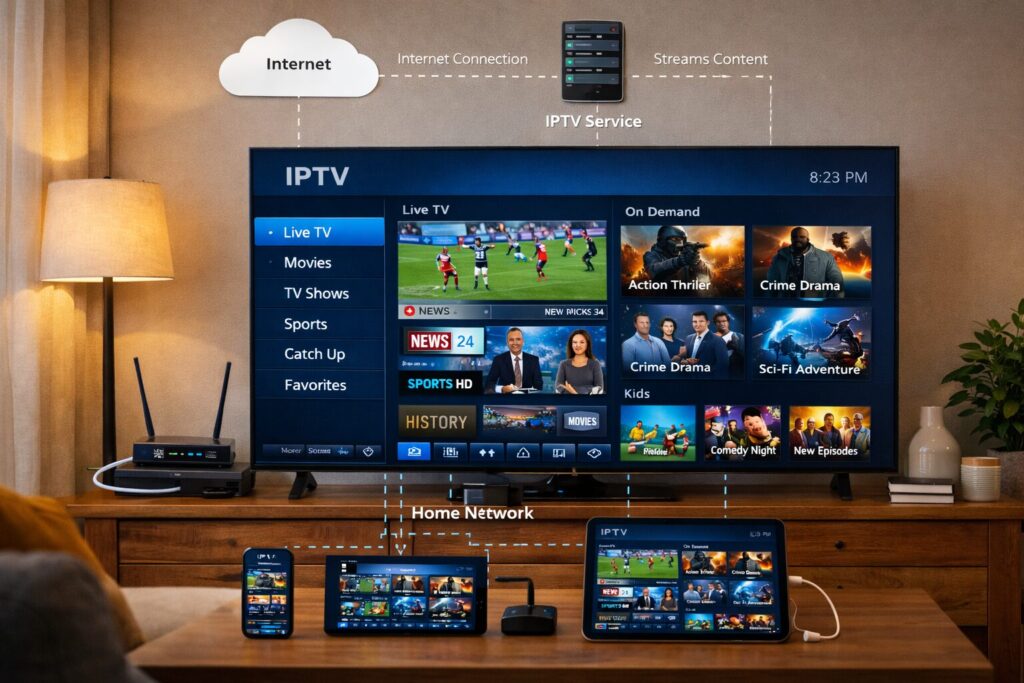
IPTV delivers television content using internet data instead of traditional cable or satellite signals.
In practice, this means:
- You stream content through an app or player
- Content is delivered in real time or on demand
- Performance depends heavily on your internet connection
Because IPTV relies on internet infrastructure, the quality of your setup matters more than the brand name alone.
Best Devices for IPTV Streaming
Choosing the right device is one of the most important decisions when setting up IPTV.
Smart TVs (Best for Simplicity)
Modern Smart TVs are often best for IPTV beginners.
Pros
- No extra hardware required
- Easy installation of IPTV apps
- Clean, remote-friendly interface
Limitations
- Limited app availability on some brands
- Slower performance on older models
Streaming Devices (Best for Performance)
Dedicated streaming devices are often considered best for IPTV performance and flexibility.
Common examples include:
- Android TV boxes
- Streaming sticks
- TV-connected media players
Why they work well
- Faster processors
- Wider app compatibility
- Regular software updates
Mobile Devices & Tablets (Best for Portability)
Phones and tablets are best for IPTV on the go, not long viewing sessions.
Use cases
- Travel
- Backup viewing option
- Personal screens
Best IPTV Apps (What to Look For)
When evaluating what’s best for IPTV apps, focus on features—not hype.
Key Features That Matter
- Playlist support (M3U or portal-based)
- Electronic Program Guide (EPG)
- Fast channel switching
- Stable playback
Avoid apps that:
- Promise unrealistic performance
- Lack updates or documentation
- Have unclear privacy practices
Internet Requirements: A Critical Factor
Even the best IPTV setup will struggle without a stable internet connection.
Recommended Speeds (Per Device)
- SD streaming: 5 Mbps
- HD streaming: 10–15 Mbps
- 4K streaming: 25+ Mbps
Best practices
- Use wired Ethernet when possible
- Avoid peak-time congestion
- Restart your router periodically
Benefits of IPTV (Why Users Choose It)

Understanding the advantages helps clarify why IPTV continues to grow in the US.
Key benefits
- Flexible viewing across devices
- On-demand content access
- No traditional cable infrastructure required
When set up properly, IPTV can be a convenient and modern streaming option.
Limitations and Considerations
It’s equally important to understand the downsides.
Potential limitations
- Dependent on internet stability
- App compatibility varies by device
- Users must ensure content access complies with local laws
Being informed helps avoid frustration and unrealistic expectations.
Best Practices for a Reliable IPTV Experience
If you’re aiming for the best for IPTV setup, follow these tips:
- Choose devices with regular updates
- Keep apps updated to the latest version
- Use a strong, stable internet connection
- Avoid overcrowding your network
- Learn basic troubleshooting (cache clearing, app restarts)
Educational resources and setup guides—like those available on FlexvesionPro.com—can help users better understand IPTV technology and configuration without confusion.
Frequently Asked Questions (FAQ)
What is the best device for IPTV in the USA?
The best device depends on your needs. Streaming devices and modern Smart TVs generally offer the most stable IPTV experience.
Is IPTV suitable for beginners?
Yes. With the right app and device, IPTV can be simple to use, especially for users familiar with streaming platforms.
Does IPTV require fast internet?
A stable connection is more important than extreme speed. For HD streaming, 10–15 Mbps per device is usually sufficient.
Can IPTV replace cable TV?
For some users, yes. However, IPTV depends entirely on internet reliability and app support.
Is IPTV legal in the US?
IPTV technology itself is legal. Users are responsible for ensuring that the content they access complies with applicable laws.
Final Thoughts: Choosing What’s Best for IPTV
There is no universal answer to what is best for IPTV, but there is a smart way to choose. Focus on reliability, transparency, device compatibility, and education, not exaggerated promises.
By understanding how IPTV works and following best practices, users can build a setup that fits their viewing habits and technical comfort level. Informational platforms like FlexvesionPro.com aim to help users navigate IPTV with clarity, accuracy, and trust—qualities that matter far more than marketing claims.