
Introduction
what is IPTV Television has changed dramatically over the last two decades. Instead of relying only on traditional cable or satellite signals, many viewers now watch TV through the internet. This shift has led to IPTV, a modern way to deliver television content using online networks.
This guide explains what IPTV is, how IPTV works, the different types of IPTV services, and how it compares to cable and satellite TV—specifically from a U.S. perspective. The goal is to provide a clear, neutral explanation that helps you understand the technology without marketing or hype.
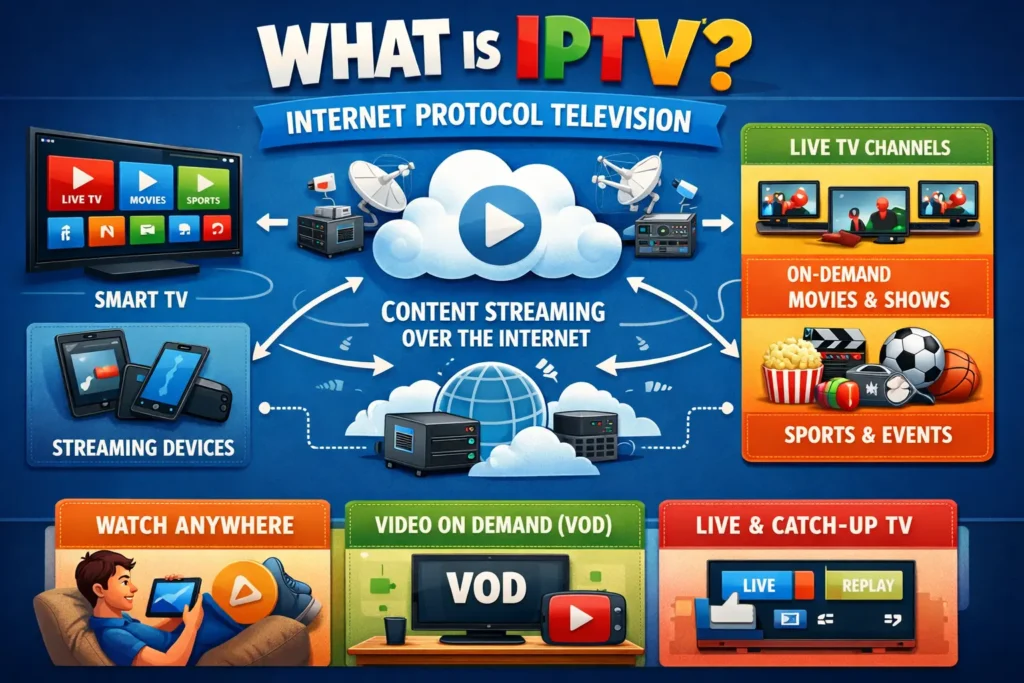
What Is IPTV? (Definition)
IPTV, or Internet Protocol Television, is a system that delivers television content over the internet instead of through traditional broadcast methods like cable or satellite.
In simple terms, IPTV uses the same internet connection you use for browsing or streaming to deliver TV channels and on-demand content.
IPTV meaning in one sentence:
IPTV is television delivered through internet protocols rather than through antennas, satellite dishes, or cable lines.
What Is IPTV? (Definition)
IPTV, or Internet Protocol Television, is a system that delivers television content over the internet instead of through traditional broadcast methods like cable or satellite.
In simple terms, IPTV uses the same internet connection you use for browsing or streaming to deliver TV channels and on-demand content.
IPTV meaning in one sentence:
IPTV is television delivered through internet protocols rather than through antennas, satellite dishes, or cable lines.
IPTV Explained: How IPTV Works
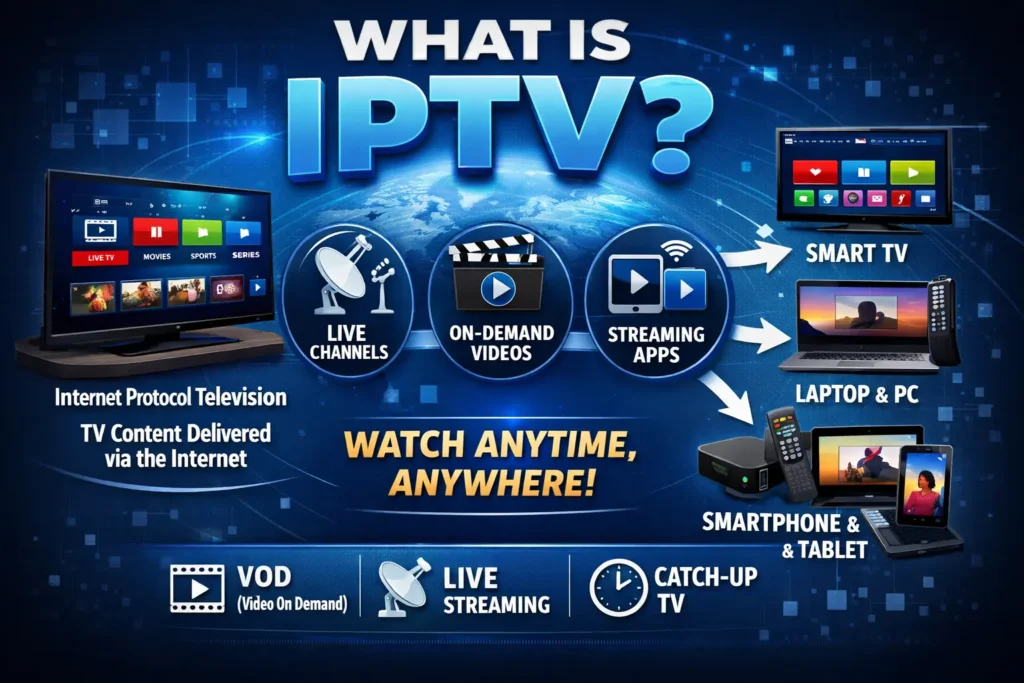
To understand how IPTV works, it helps to compare it to traditional TV.
Traditional TV delivery
- Content is broadcast to everyone at the same time
- Viewers receive the signal whether they watch or not
- Limited flexibility and interactivity
IPTV delivery
- Content is sent only when a user requests it
- Delivered over managed or open internet networks
- Supports on-demand and interactive features
Basic IPTV workflow
- TV content is stored on secure servers
- The content is converted into digital data packets
- Data is delivered over the internet
- A compatible device decodes and displays the video
This packet-based delivery is why IPTV can offer features like pause, rewind, or instant playback.
Types of IPTV Services
There are three main IPTV service types commonly used today.
1. Live IPTV
- Streams TV channels in real time
- Similar to watching traditional cable TV
- Often includes news, sports, and entertainment channels
2. Video on Demand (VOD)
- Users choose what to watch and when
- Includes movies, series, and recorded programs
- Comparable to streaming libraries
3. Time-Shifted IPTV
- Allows delayed viewing of live broadcasts
- Includes features like replay or catch-up TV
- Useful for watching shows after they air
IPTV vs Cable and Satellite
The difference between IPTV vs cable or satellite lies mainly in delivery technology.
Comparison Table
| Feature | IPTV | Cable TV | Satellite TV |
|---|---|---|---|
| Delivery method | Internet connection | Coaxial cable | Satellite signal |
| On-demand flexibility | High | Medium | Low |
| Interactive features | Advanced | Limited | Very limited |
| Installation | Minimal hardware | Physical wiring | Satellite dish |
| Location dependency | Low | Medium | High |
IPTV’s flexibility comes from its internet-based design, while cable and satellite rely on fixed infrastructure.
Is IPTV Legal in the USA?
A common question is whether IPTV is legal in the USA. The answer depends on how the service operates.
Key facts
- IPTV technology itself is legal
- Legality depends on licensing and content rights
- Authorized IPTV providers have agreements with content owners
- Unauthorized services may violate U.S. copyright laws
In the United States, media distribution is regulated by copyright law. Viewers should ensure that any IPTV service they use has the legal right to distribute its content.
Pros and Cons of IPTV
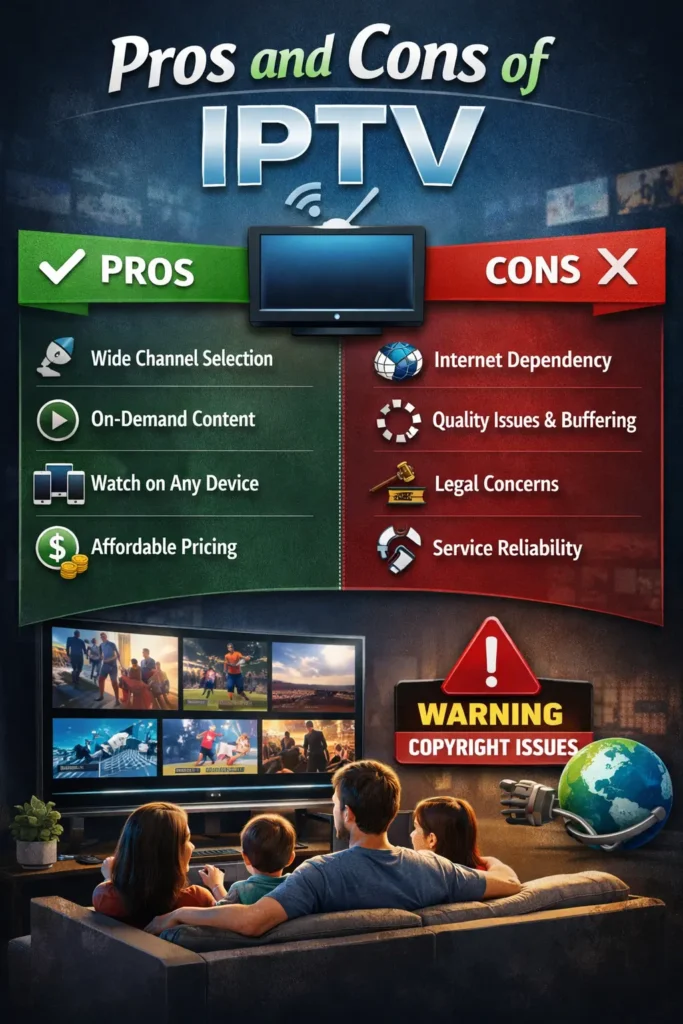
Advantages
- Internet-based delivery
- On-demand and time-shifted viewing
- Device flexibility
- Efficient bandwidth usage
Limitations
- Depends on stable internet connection
- Video quality may vary with network speed
- Legal status depends on provider compliance
Common Devices Used for IPTV
IPTV can be accessed on a wide range of internet-enabled devices, including:
- Smart TVs
- Streaming devices (e.g., digital media players)
- Smartphones and tablets
- Desktop and laptop computers
- Dedicated IPTV set-top boxes
This device flexibility is one reason IPTV adoption continues to grow.
Why IPTV Is Growing in the USA
Several trends contribute to IPTV’s increasing popularity in the U.S.:
- Widespread high-speed internet access
- Preference for on-demand viewing
- Reduced reliance on traditional cable subscriptions
- Growth of connected home devices
As viewing habits evolve, IPTV aligns well with modern digital lifestyles.
Informational Conclusion
Understanding what IPTV is helps clarify how modern television delivery works. IPTV uses internet technology to provide live TV, on-demand content, and time-shifted viewing in a flexible, data-driven way.
For readers who want to continue learning about IPTV technology, devices, and industry standards, platforms like FlexvesionPro publish educational resources focused on explaining IPTV systems in a clear and neutral manner.
This guide aims to fully answer the search intent behind “What is IPTV” by providing accurate, practical, and up-to-date information without promotional bias.